
The Indian military also acknowledged suffering some losses but declined to provide the details as the operations are going on.
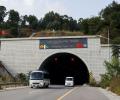
The announcement on expansion of CPEC was made following a meeting among Chinese Foreign Minister Wang Yi, his Pakistani counterpart Ishaq Dar and Afghanistan's Acting Foreign Minister Amir Khan Muttaqi in Beijing, according to a Pakistani readout.
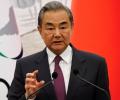
China on Tuesday called for a 'comprehensive and lasting ceasefire' between India and Pakistan, urging both countries to properly handle their differences through dialogue.
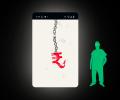
In an age where personal data is a valuable commodity, investing in cyber insurance is not just a prudent choice; it is becoming a necessity for individuals and families alike, says T A Ramalingam.

Modi will start his visit on June 6 by dedicating to public the Chenab rail bridge, which is a key part of the 272-km Udhampur-Srinagar-Baramulla railway link (USBRL) that will provide direct train connectivity to the valley.

'Still, people are asking why we have not gone for a full-out war. As a military man, if ordered, I will go to war, but that will not be my first choice'
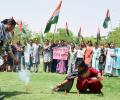
Opposition parties in India, including the Congress, Left parties, Samajwadi Party, Bahujan Samaj Party, Trinamool Congress, Dravida Munnetra Kazhagam, Rashtriya Janata Dal, Shiv Sena (UBT), and NCP (SP), have unanimously hailed the armed forces' "Operation Sindoor", a retaliatory strike against terrorist infrastructure in Pakistan and Pakistan-occupied Kashmir (PoK). The operation, which involved missile and drone strikes, was conducted in response to the April 22 Pahalgam terror attack. Despite political differences, all parties expressed support for the government and the armed forces, stressing the importance of national unity and integrity in the face of terrorism. While emphasizing the need for diplomatic avenues to prevent further escalation, some parties also called for caution in attributing political credit for the strikes.

The political and ideological differences between the Congress and Shashi Tharoor is no longer a matter of whispers.

The International Monetary Fund (IMF) has slapped 11 new conditions on Pakistan for the release of the next tranche of its bailout programme and warned that tensions with India could heighten risks to the scheme's fiscal, external, and reform goals, according to a media report on Sunday.

The worst-hit in the Pakistani shelling was Poonch district which accounted for all the civilian deaths, the officials said, adding 28 persons were also injured and the condition of some of them was stated to be critical.
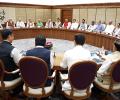
The diplomatic exercise aimed at presenting India's stance against Pakistan on terror comes in the wake of Operation Sindoor -- the Indian offensive against terror camps in Pakistan and Pakistan-occupied Kashmir following the April 22 terror attack in Pahalgam in which 26 people, mostly tourists, were killed.

Several Indian states bordering Pakistan have implemented stringent security measures, including school closures, blackouts, and cancellation of leave for police and administrative personnel, in response to escalating tensions between India and Pakistan. These measures were taken after India conducted airstrikes on terror infrastructure in Pakistan in retaliation for the April 22 Pahalgam massacre. Punjab, Haryana, Rajasthan, Gujarat, and West Bengal have all implemented these precautionary measures.

The terrorists opened fire on the camp housing labourers of a private company working on construction of a tunnel Gund area in the district, officials said.

During the talks, the two sides appreciated the deepening of the defence ties as a key pillar of the strategic partnership and welcomed the creation of a Ministerial Committee on Defence Cooperation under the Strategic Partnership Council.

Over 100 terrorists, including high-value targets such as Yusuf Azhar, Abdul Malik Rauf and Mudasir Ahmed, were eliminated during Operation Sindoor on May 7, the Indian military said on Sunday.
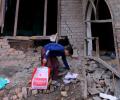
Amid escalating tensions between India and Pakistan, the US has said it will not get involved in the conflict, stressing that it is "fundamentally none of our business." While acknowledging concerns about a potential nuclear war, Vice President J D Vance emphasized that the US cannot control India and Pakistan, but can encourage them to de-escalate. The US has also reiterated its support for direct dialogue between the two countries and encouraged efforts to improve communications.
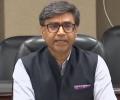
India has accused Pakistan of breaching an understanding reached earlier on Saturday to stop military actions. Foreign Secretary Vikram Misri said there have been repeated violations of the understanding since the evening, and that the Indian armed forces are giving an appropriate response.
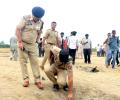
Indian Armed Forces brought down a number of these drones using kinetic and non-kinetic means.

US President Donald Trump has repeated his claim that Washington got involved with India and Pakistan, saying he didn't like what was happening and that he did a good job as he convinced the two countries to let's have peace and let's go and make trade deals.
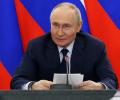
Russian President Vladimir Putin on Sunday proposed holding direct peace talks with Ukraine in Istanbul on May 15 without any preconditions, a move welcomed by Ukrainian President Volodymyr Zelenskyy, who insisted that Moscow must agree to a ceasefire first.
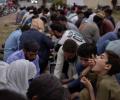
With general government debt now approaching three-quarters of GDP, and only incremental reform efforts visible, Pakistan risks prolonging its economic stagnation unless fundamental governance, regulatory, and industrial overhauls are undertaken.

'Fears in Washington began to intensify when it was realised that subsequent Pakistani and Indian attacks on major military facilities -- which were significant in terms of geographic scope and intensity -- could rapidly take both sides to where neither actually wanted to go.' 'The US objective was to stop the fighting as soon as possible. Everything else was secondary.'
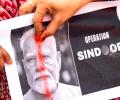
World leaders, including the UN Secretary-General and US President Donald Trump, have urged India and Pakistan to exercise restraint and seek peaceful solutions to the ongoing tensions. The calls for calm come after India conducted airstrikes in Pakistan-occupied Kashmir in response to a recent terrorist attack. Leaders from the US, Russia, UK, China, UAE, Qatar, and Japan have expressed concern over the escalating situation and emphasized the need for dialogue and de-escalation.
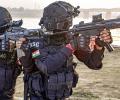
How to conduct the mock exercise with active public participation of people was discussed threadbare at a high-level meeting chaired by Union Home Secretary Govind Mohan. Top civil and police officers of the country participated in the meeting, official sources said.

From the Sensex firms, Adani Ports, Eternal, Bajaj Finance, Axis Bank, Bajaj Finserv, Reliance Industries, Power Grid and NTPC were the major gainers. Sun Pharma, however, tanked over 5 per cent.

Mahmudabad, head of the political science department at the private university, was arrested on Sunday after two FIRs were lodged on stringent charges, including endangering sovereignty and integrity, for his social media posts related to Operation Sindoor, police and his lawyer said.

Authorities in Jammu and Kashmir on Sunday asked border villages residents, who were evacuated to safer places in view of cross border shelling by Pakistan, not to rush back to homes as they are yet to sanitise and clear these areas of any unexplored shells.

The escalating military tension between the two nations, a deluge of information, and the inability to sift through fake and real news can significantly affect the psychological well-being of individuals, said mental health experts.

Israel on Saturday released footage showing Hamas leader Yahya Sinwar moving his belongings to a tunnel in Gaza hours before the October 7 attack last year that triggered the ongoing war.

The tragedy struck the family on May 7 when they found themselves in the middle of intense Pakistani shelling at their rented accommodation in Poonch which was badly hit by the cross-border shelling.
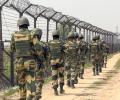
The United States has issued an advisory cautioning against travel to the immediate vicinity of the India-Pakistan border and the Line of Control due to terrorism and the potential for armed conflict and to the provinces of Balochistan and Khyber Pakhtunkhwa.
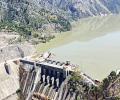
India has suspended the Indus Waters Treaty with immediate effect, accusing Pakistan of breaching the pact by refusing to negotiate modifications and engaging in sustained cross-border terrorism. The decision follows a recent terror attack in Jammu and Kashmir that killed 26 people. Pakistan has rejected India's move, calling it an "act of war."

'They thought nobody would hit Bahawalpur and Muridke because they have nuclear weapons.' 'They used to think India cannot touch our military targets because we are a nuclear weapons country.' 'After Operation Sindoor we have called their bluff.'

The Border Security Force (BSF) remains on high alert along the International Border (IB) and has not let its guard down, BSF Inspector General, Jammu Frontier, Shashank Anand said on Tuesday. Operation Sindoor, aimed at preventing infiltration attempts, continues as Pakistan cannot be trusted, he added. Anand highlighted the BSF's robust response after the April 22 Pahalgam terror attack, including destroying multiple terror launch pads and thwarting infiltration attempts.
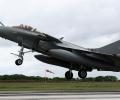
The western media is going all out to prove that India suffered a major setback in Operation Sindoor and how China helped shoot down Indian fighter jets. One of the articles published in British newspaper Telegraph stated Operation Sindoor shattered the myth of India's air dominance over Pakistan. "The Pakistani Air Force, aided by Chinese targeting satellites and AWACS executed a sensor-fusion kill. The Rafales never got a lock, never even saw their adversary. When the missiles hit, it was already over," wrote the British Newspaper, The Telegraph.
'...and the country should be impoverished completely.' 'Once this is done, the political class would take over and then play a part in real democracy where the army is under the control of the government, not vice-versa.'

'If they aim to remain aligned with the public sentiment, as any democratic government should, then they must respond. Why else would the prime minister have cut short his visit to Saudi Arabia? And why would he have instructed the home minister himself to travel to Srinagar to assess the situation firsthand? This suggests that something is indeed being planned. I am quite certain of that, although the exact form it will take remains to be seen.'
Witkoff confirmed that while progress had been made, there were still unresolved details that would be addressed during the upcoming talks.
'India enjoys conventional superiority, but nuclear deterrence imposes clear boundaries.'
'It could take the form of sporadic LoC violation through heavy artillery and mortar fire, focusing on border villages where the Hindu Dogra population is predominant.'
 © 2026 Rediff.com - Advertise with us - Disclaimer - Privacy Policy - Sitemap - Feedback - About us - Terms of use - Grievances